Why brand story clarity is the only signal that matters in luxury
By Daniel Langer, originally published in Jing Daily
Luxury is an infinite game, yet most brands are playing it wrong. To win, they must focus on narrative clarity, not just product quality.
Recently, I was in Los Angeles teaching my luxury marketing module at Pepperdine University’s President and Key Executive program. The room was filled with seasoned leaders. One topic that captured their attention was a fundamental misunderstanding that plagues the luxury industry.
Many brands believe they are masters of storytelling. In reality, they are just running generic advertising campaigns that don’t create any value for clients.
A profound difference separates these concepts. A campaign is transient. It changes with the season, the creative director, or the mood of the marketing department. Brand storytelling is permanent. It embodies the one core value, the singular idea a brand wants to be remembered for. It is a unique perspective.
The game theory mistake undermining brand equity
During our session, I used game theory to illustrate why so many luxury houses fail to build lasting equity. The insights were stark.
Game theory teaches that every interaction between a brand and a consumer is a move in a game. Most managers play a finite game. They are obsessed with winning the quarter, beating a specific competitor, or hitting a short-term sales target. They optimize for the immediate win.
However, luxury requires playing an infinite game to maximize extreme value creation over decades. In this game, the most critical currency is trust. Specifically, the trust that is built through consistent signals.
Every action a brand takes sends a signal to the market. Clients, competitors, investors, and the media decode these signals to understand what the brand stands for. If the signal is clear, brand equity grows. The market understands the value proposition and the brand’s distinct point of view. However, if the signal is ambiguous, the result is always confusion.
Ambiguity is the enemy of value. When a brand oscillates between conflicting messages, it creates destructive noise.
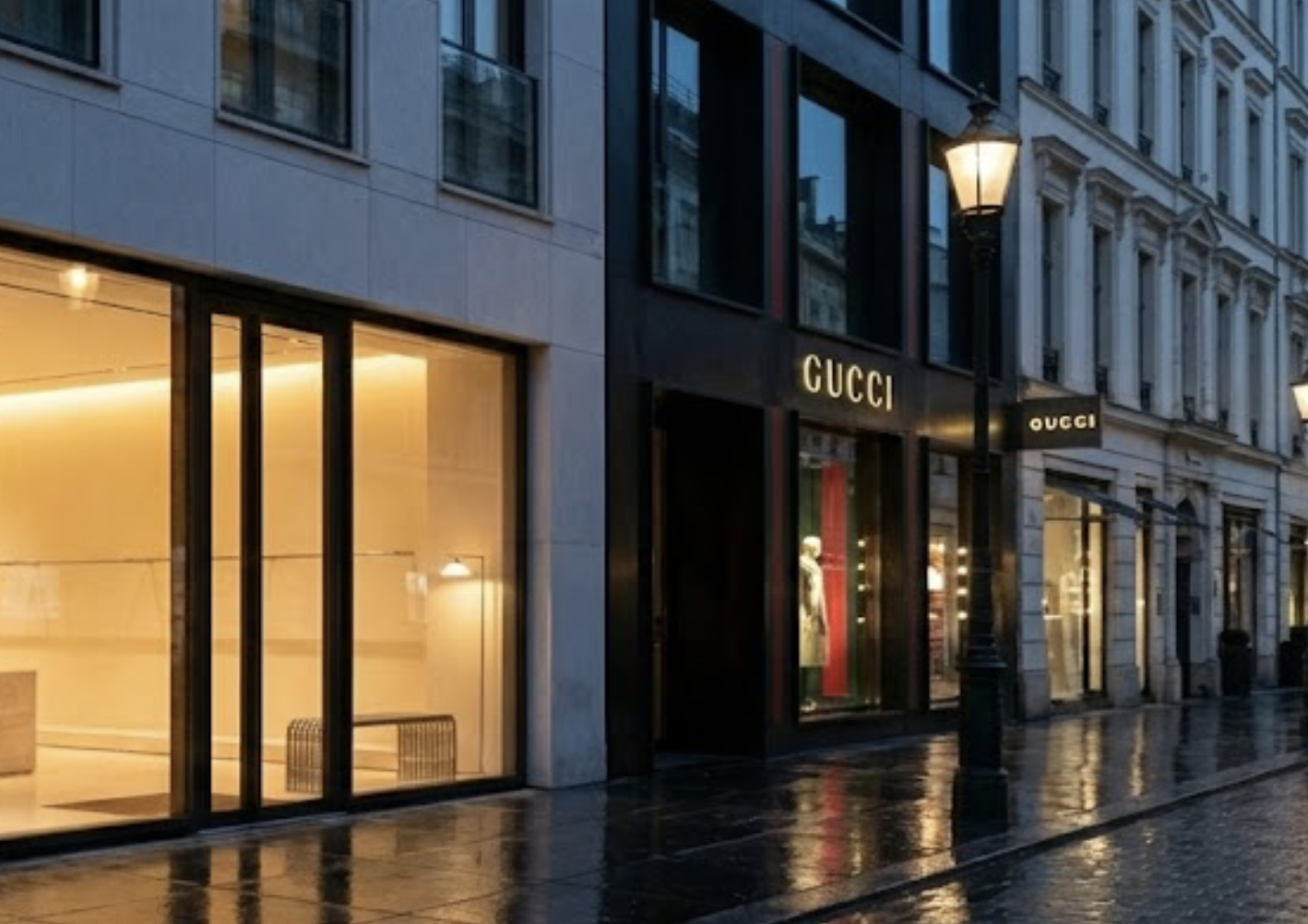
One day a brand speaks of timeless exclusivity; the next, it chases a fleeting trend on TikTok. One month it protects its pricing power; the next, it quietly discounts to move inventory or sells through outlet stores. One day it rolls out the red carpet for a client; the next, it ignores the same person. One day it stands for freedom of self-expression, as Gucci did in the eras of Tom Ford and Alessandro Michele; the next, it falls into conformity.
These are defecting moves in the language of game theory. They signal that the brand does not believe in its story. Hence, the market stops believing in the brand. Revenues and profits collapse.
Quality and heritage do not make a story
I see this playing out in real time across the luxury sector. I often analyze brands that claim to be iconic or innovative, yet their portfolio is a collection of disjointed items that follow no central narrative. Management assumes that a high-quality product and a logo are enough to sustain a premium.
This is a dangerous and myopic mistake. In the infinite game, quality is just the entry ticket; the real differentiator is the clarity of the signal. Brands that are struggling today rarely lack product capability. They lack narrative clarity. They confuse history with strategy. They assume that because they have been around for a century, they have a story. But time is not a story, and survival over decades is not a client-facing quality. The game is played anew with every move.
A true luxury brand story answers a simple yet brutally difficult question. Why does the brand exist? What is its role in the world? If the answer involves quality, craftsmanship, or heritage, then the brand has no story. These are generic category descriptors. They are the noise. They lead directly into the sea of sameness.
A story requires a specific, proprietary angle that no one else can claim. It demands the courage to polarize. A point of view will always attract some and repel others. Brands must be comfortable with that. In the desperate attempt to please everyone, most brands seduce no one.
Sending a clear signal
This is where the discussion at my Pepperdine program became most intense. Maintaining a clear signal requires sacrifice. It means saying no to revenue that does not fit the narrative. It means killing products and messages that dilute the core value even if they seem profitable in the short term. In a finite game, you take every dollar you can get. But in an infinite game, you must reject any dollar that compromises your future.
Most luxury brands lack this discipline. They are terrified of leaving money on the table. So, they broaden their appeal, dilute their aesthetic, and soften their messaging. The result is a signal so weak that it gets lost in the background.
To survive, brands must stop viewing storytelling as a marketing function. It is a strategic imperative. When I work with brands, I always insist that the CEO and the board are involved when the core value is defined because a brand story cannot be developed in isolation.
Importantly, brands must never have two or more core values. Multiple values inevitably dilute clarity as conflicts emerge between them. The singular brand story must evoke a significant emotional response based on relevant consumer insights. Once defined, it dictates the company strategy, product roadmap, pricing, and client experience. The story must lead. Everything else must follow. If a move does not reinforce the story, it must not be made.
The market is unforgiving of ambiguity. Consumers today gravitate toward clarity. They reward brands that have the confidence to stand for something specific. Stop playing the finite game. Stop copying competitors. Stop following trends that have nothing to do with your core value. Look at your brand through the lens of game theory. Ask yourself if your last ten strategic moves sent a consistent signal or if they simply created ambiguous noise.
If you cannot articulate your brand story in a single sentence devoid of generic buzzwords, you do not have a story. You have mass confusion. In the infinite game, that is a death sentence. Luxury brands must treat their story as their most valuable asset. They must play the long game and protect their signal at all costs. Clarity is the only thing that matters. Are you ready?
This is an opinion piece originally published in Jing Daily by Daniel Langer, CEO of Équité, recognized as one of the “Global Top Five Luxury Key Opinion Leaders,” and advisor to some of the most iconic luxury brands in the world. He serves as an executive professor of luxury strategy and pricing at Pepperdine University in Malibu and as a professor of luxury at NYU, New York. Daniel has authored best-selling books on luxury management in English and Chinese, and is a respected global keynote speaker.
Daniel conducts in-person masterclasses on various luxury topics across the world. As a luxury expert featured on Bloomberg TV, Forbes, The Economist, and others, Daniel holds an MBA and a Ph.D. in luxury management and has received education from Harvard Business School.