The Future of Luxury: An Interview with Dr. Daniel Langer
Dr. Daniel Langer is the CEO of Équité, Executive Professor of Luxury Strategy at Pepperdine University and NYU, and one of the world's foremost authorities on luxury brand strategy. In this interview, he addresses the most pressing challenges facing luxury brand leaders today.
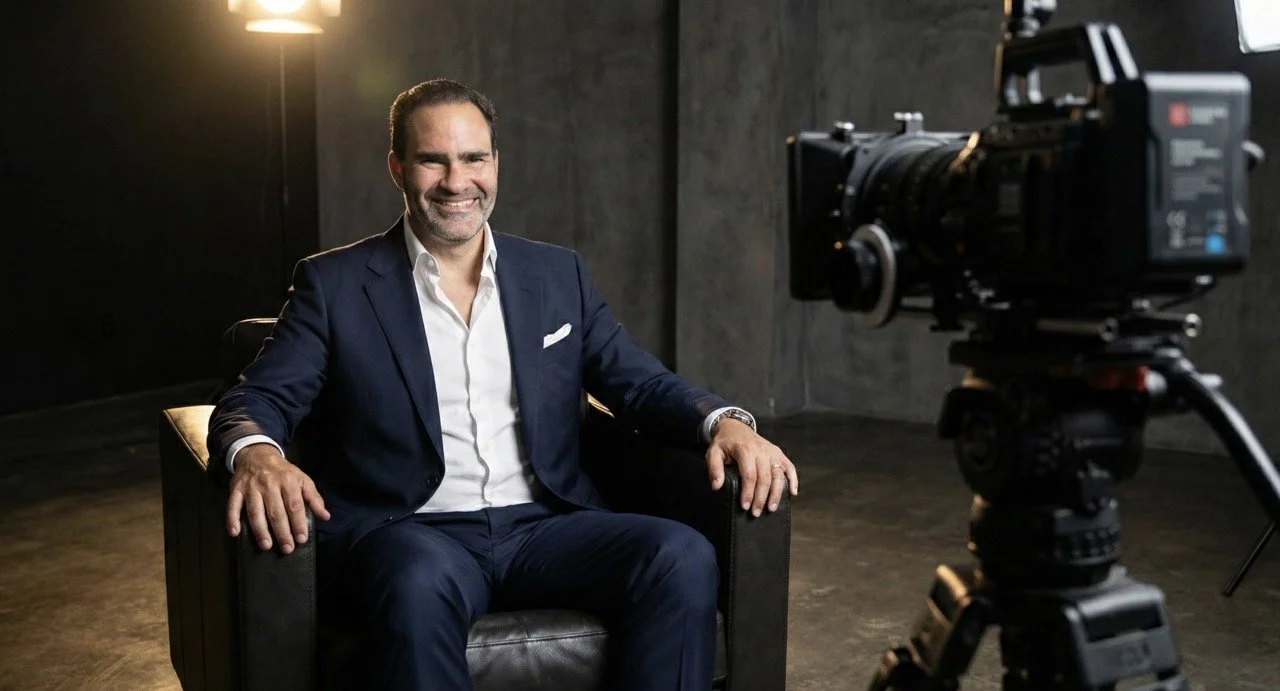
Dr. Daniel Langer
You have said that luxury is experiencing a structural failure. That's a strong claim. What exactly is failing?
Dr. Langer: The mindset. Most luxury executives are trapped in a cycle of managing quarterly growth, creative director rotations, and sell-through rates. They operate under the assumption that managing the short term effectively will secure the future. In luxury, that logic is fatal. The brands that are struggling right now aren't struggling because of a bad collection or a weak campaign. They're struggling because they've lost sight of what they actually are: a long-term store of emotional and financial value. The moment you start managing a luxury brand like a consumer goods company, you begin destroying the very thing that makes it valuable.
What do luxury clients actually pay for, if not quality and craftsmanship?
Dr. Langer: Quality and craftsmanship are rationalization factors. They're the stories clients tell themselves to justify a significant financial outlay. My research confirms that the true driver of a luxury purchase is an anticipated positive perception shift. When someone acquires a luxury item, they're purchasing a transformation of their own identity. They anticipate feeling more attractive, more intelligent, more influential. That's the intrinsic value of the brand signal. If the brand doesn't deliver that emotional and social return on investment, the physical product becomes irrelevant. Most brands dramatically underestimate the fragility of this perception shift. They treat it as a byproduct of marketing when it's actually the core of their entire existence.
There's been a lot of talk about a luxury slowdown in China. Is the Chinese consumer pulling back?
Dr. Langer: Chinese consumers have not stopped spending. They've just stopped spending in the way global brands expect them to. This is a critical distinction that most leadership teams are misreading. The demand is there, but it's being redirected. The assumption that a dip in Chinese retail numbers means a structural decline in appetite for luxury is a dangerous oversimplification. Brands that understand how Chinese consumer behavior is actually evolving, rather than relying on outdated frameworks, are finding significant opportunities. The ones clinging to the old playbook are the ones panicking.
You talk about luxury as an asset class. What does that mean for how brands should be managed?
Dr. Langer: Clients are increasingly treating luxury as a legitimate investment category. Rare handbags, limited-edition timepieces, collectible pieces are being scrutinized for resale liquidity and long-term appreciation. This follows the same underlying principle as the emotional perception shift: both require absolute trust in the future management of the house. An investor only puts capital into an asset if they believe the brand will protect its scarcity and desirability over time. The brand itself is the asset. Every decision made today, every discount, every over-distribution, every trend chase that contradicts the DNA, is being evaluated by sophisticated clients who are watching whether leadership can be trusted with a long-term store of value.
What's the biggest mistake you see luxury brands making with their client experience?
Dr. Langer: They obsess over the hardware and ignore the emotional design. They redesign flagship stores, reinvent the sequencing of the customer journey, and hope that a new process will magically create a luxury perception. This is a fundamental misunderstanding. I've analyzed hundreds of luxury brands and conducted countless interviews with ultra-high-net-worth clients. The data is unambiguous: it's rarely about the venue or the steps of service. The difference between an outstanding experience and a catastrophic one is purely emotional. When the experience is outstanding, the client feels valued. When it's catastrophic, they feel devalued. The actual steps of a customer journey are remarkably consistent regardless of price point. A stay at the Cheval Blanc in Paris follows the same sequence as a budget hotel. You arrive, check in, go to your room, sleep, check out. The magic is in how each step is infused with a level of humanity and precision that makes the client feel like the center of the universe.
Can you give a concrete example of what that looks like in practice?
Dr. Langer: During a mystery shopping audit at a major airport in Asia, I walked into a top-tier luxury boutique. Instead of launching into a rehearsed script about heritage or the latest collection, the sales advisor asked me a practical question: where was my departure gate, and what time did I need to board? When he realized I had limited time and a long walk ahead, he offered to reserve an electric cart to drive me directly to the gate. He then asked if I planned to visit the lounge for breakfast, and when I said yes, he offered to arrange coffee and a croissant right there in the store. He didn't sell me anything in that moment. He gave me time and peace of mind. He acknowledged my stress and solved it. The result? I bought more than I anticipated. The sequence of browsing a store at an airport is standard. But by infusing it with extreme empathy and a hyper-personal solution, he transformed a transaction into a memory. That memory translated into a hard monetary outcome for the brand.
You've coined the term "extreme value creation." What does it mean?
Dr. Langer: It means making the client feel valued in a way that transcends the product entirely. It's the essence of what luxury should be. It's not about reinventing the steps of the sale. It's about infusing every single step with a level of humanity and precision that signals to the client they are the most important person in the room. This is what separates brands that command extraordinary pricing power from those competing on discounts and trends. When you create extreme value, the price becomes secondary. The client isn't comparing you to a competitor. They are investing in a feeling, an identity, and a relationship that no one else can provide.
How should brands think about designing experiences that actually create this feeling?
Dr. Langer: Stop thinking like logistics managers and start thinking like showrunners. A standout luxury experience should be scripted like a great Netflix series. You need a hook: the opening moment must be unique, strong, and immersive. It must signal immediately that the client has entered a different world. Then you need a celebratory closing that leaves them wanting more. But critically, you need emotional highlights in between. This is where most brands fail. They treat the luxury journey as a flat line of “elevated” service. Human psychology doesn't work that way. We need peaks. We need surprise and delight. This requires defining a specific target emotion and creating an emotional arc throughout the journey. If you don't know exactly how you want your client to feel at every specific touchpoint, you're leaving the experience to chance. And chance is not a luxury strategy.
The next generation of wealthy clients, Gen Z, younger millennials, how are they different?
Dr. Langer: They are more sophisticated about all of this than any generation before them. They grew up with resale platforms, so they understand scarcity economics intuitively. They can spot short-term brand management from a mile away. They are applying investment logic to their luxury purchases in ways that older generations never did. And their expectations for the experience itself are disproportionately higher. They don't just want to feel valued, they expect it as a baseline. The brands that will win the next decade are the ones treating every decision as a signal of long-term intent. The next generation is watching everything. The quality of the in-store experience, the consistency of the brand narrative, the alignment between what a brand says and what it does. Everything is a signal. And this generation is exceptionally good at reading signals.
What's your 4E of Luxury framework, and why does it matter?
Dr. Langer: The 4E framework, Emotion, Engagement, Experience, and Exclusivity, is my proprietary approach to building and managing luxury brands that command extraordinary pricing power. It addresses the reality that most brands are still operating on outdated models focused on product and distribution. Emotion is the foundation: if you don't understand the specific emotional shift your client is seeking, nothing else works. Engagement is about how you create ongoing dialogue and connection beyond the transaction. Experience is the design of every touchpoint with the precision and intentionality we just discussed. And Exclusivity is about protecting scarcity and desirability as long-term strategic assets, not marketing tactics. Every element reinforces the others. When one breaks down, the entire brand signal weakens.
What advice would you give to a luxury CEO reading this right now?
Dr. Langer: Start managing for the long term. Luxury is an infinite game. Recognize that you're not selling products. You are managing perceptions and protecting investments. Every short-term decision that weakens the brand signal for the sake of a quick sale is a form of brand suicide. The question facing luxury leadership is no longer about growth. It's about the structural integrity of the dream. Only the stewards of long-term extreme value will remain. Everyone else is on borrowed time.
And if they could do only one thing tomorrow?
Dr. Langer: Stop obsessing over the process. Start obsessing over the emotion. Ask yourself: do we know exactly how we want our client to feel at every single touchpoint? If the answer is no, that's where you start. Everything else follows from there.
Dr. Daniel Langer is the CEO of Équité, Executive Professor of Luxury Strategy at Pepperdine University and NYU, bestselling author, and host of the Future of Luxury podcast. He is named "the authority in luxury" by The Economist and recognized as a Global Top 5 Luxury Key Opinion Leader by Netbase Quid.